To Turn Free Information Into
Nonfiction Kindle Ebooks
People Will Want To Purchase
They Will Give You What You Want
New book authors often struggle with how to create books people will be willing to buy.
They imagine how their lives could be changed for the better, if only they could write books like those they have enjoyed reading themselves.
They respect those authors, who came before them, because they seem to have done something extraordinary.
Those authors had been able to sit down at the keyboard and create something from thin air that other people were happy to buy and read.
How many times have you sat down to write a book, and you were disappointed with how things turned out?
Maybe you struggled to decide on what topic to write?
Perhaps you had great difficulty putting together your book?
Maybe you got tripped up when you were putting together your book listing?
It might even be possible that you thought you did everything right, but no one or very few people purchased your books?
Failure is painful...
It often results in people questioning their own self-worth and self-confidence.
It makes writers question whether they really have anything valuable to contribute to the world around them.
And All Failures Are Part Of Becoming Better
In 1979, I was in ninth grade...
My grandmother was always asking me, "What do you want to be when you grow up?"
I always knew...
I always told her, "I want to own my own business, and I want to be a published author."
She has been dead now for 29 years, but I can still hear the condescension in her voice, and the look of great concern in her eyes.
Without fail, whenever she asked the question, I would have the same answer.
Also without fail, she would always respond the same way...
"Bill," she would say with a pause, to make sure I was listening. "People like us, we don't own our own businesses, and we certainly don't write books."
Bless her heart. I think she honestly believed those words to be true.
I am not really sure what made that day in 1979 different from all of the rest...
That was the day, with complete conviction, I looked directly into her eyes and said, "Maybe people LIKE YOU don't. But I will."
Ironically, she was partly right. I didn't do it while she was alive, but now that she is dead and gone, I have done everything I said I would do.
And, I have experienced plenty of failure along the way...
I wrote my first story in 1984. (Horror short story, of all things.)
I got published for the first time in 1992. (History nonfiction.)
I got paid for something I had written for the first time in 1999. (Nonfiction how-to.)
I started my first successful business in 2001. (After several failures in the late 80's, early 90's.)
I had to keep my day job until 2005.
The good news is that every single failure made me stronger and it made me better.
I wouldn't be the person I am today, without all of those failures I have had in the last three-and-a-half decades.
The really good news is that I perservered and I learned...
Now, I earn my living as a writer...
And, I also teach others how they can do what I have done...
They Want Answers to Specific Questions
When you start answering specific questions for your readers, people will start to buy your books more reliably.
People have questions, and they want to find answers.
Any time we apply this idea to the books we write, we see a lot more book sales.
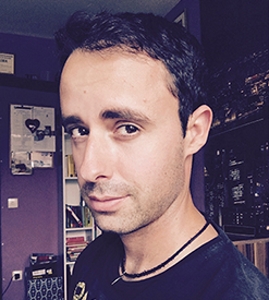
Bill Platt & Andreas Quintana both earn their living
writing the kinds of books people want to read
and are willing to purchase...
Andreas wrote his first successful book in 2012. Under his first pen name, he went on to write six more books. Under other pen names, he has published another two dozen books.
I wrote my first book in 1999. I didn't make a lot from it, but I made some money. By the time I got to my second book, I lost my nerve quickly and changed it from paid to free. Then I gave away 80,000 copies of it over the following decade. LOL It was probably a much better book than I had imagined.
After several false starts, I finally wrote a commercially successful book in 2010. Since then, I have written and published over 100 books, under a variety of pen names, with loads of success stories and a few failures along the way.
Bill & Andreas Both Agree
Independently, we have both arrived at writing and publishing nonfiction books following the same 4-step formula.
Just 4 steps, with each step is as important as the other.
If we try to take shortcuts and skip steps, we will fail in our sales goals.
There is nothing more heartbreaking than to spend a lot of time writing a book, and then finding that no one is willing to buy it.
When we skip steps, we usually regret our decision to do so.
When we see one of our books crash and burn, depending on which steps we skipped, we might be able to go back and fix a broken book - not always, but sometimes.
We have found that we are simply better off to do all four steps, than to try to repair a broken book. If we don't break it, we don't have to fix it later.
Inside of "Kindle Nonfiction Mastery," we are going to explain all 4 steps in detail, with examples, so that you can understand exactly how to create books people are going to want to buy.

This training is delivered in a 37-page PDF, which also includes the download link for "Kindle Wealth Rolodex," which describes over 250 resources where you can promote your books online.
Write Books People Will Want To Buy
Understanding what people are willing to buy begins with understanding what people want to learn.
Most new book authors tend to overcomplicate the process of writing a good book, by focusing on the wrong things.
The most important steps are actually those you do, before you begin to write, and those you do after you have written your book.
Inside of "Kindle Nonfiction Mastery", we will demonstrate how to:
- Find the right topic;
- Discover if a book idea has any merit;
- Spot trends that will help your book sales;
- Determine the depth of interest in the topic;
- Research your chosen topic;
- Build a strong book outline;
- Choose the appropriate keywords for your book listing;
- Understand our formula for creating an effective book title;
- Utilize keywords properly in your book descriptions;
- Design a good book cover;
- Pick the most appropriate price point for your book;
- Implement our proven book promotion strategy;
- And, we will provide you access to a list of 250+ book promotion resources, described inside "Kindle Wealth Rolodex".
Within our "Kindle Nonfiction Mastery", we will help you get on track to do the things that must be done to ensure that your chances of success as a nonfiction book author are greatly improved.
Continuing To Do What Isn't Working
And Expecting Different Results
You wouldn't have read this far into this page if you were happy with your current book sales.
Which tells us that you feel there is always room for improvement in your self-publishing business.
Over the years, Bill Platt & Andreas Quintana have both independently written and published nonfiction books that have created healthy book royalties for them.
The thing they find so amazing about this industry is they can sit down in front of their computers with nothing more than a word processing software and access to the internet, and utilizing those two tools, they can create books (assets) that will continue to pay them healthy book royalties for many years to come.
After they create and publish one book, they can create and publish more books.
Each book they write and publish will provide for them new sales and additional book royalties.
"If it isn't broken, don't fix it."
Human natures seems to dictate that if something seems too easy, then we must add something to it to make it actually work.
There is actually nothing difficult about what we do.
More often than not, keeping it simple really does work best.
Bill has just released this product Kindle Nonfiction Mastery. Although it focused on nonfiction writers, I found it invaluable for researching my low content books. I have gone through the pdf and it is brilliant.
The principles he outlines are just perfect for finding topics and niches for your journals, planners, and content books.
– Di Heuser
In "Kindle Nonfiction Mastery" Andreas and Bill showed me why it's a good idea to write with the reader in mind first, and me second. More importantly, the four steps are incredibly easy to do after reading the instructions in the training.
If you're not happy with how your nonfiction books are doing, I strongly urge you to get "Kindle Nonfiction Mastery."
– Mike Nielsen
Isn't it time for you to actually start creating books that people will want to buy?
Are you ready to start experiencing for yourself the promise and potential of selling books on Amazon Kindle?
Most everyone reading this page already has the talent necessary to do what we do.
They just don't have the right understanding to make it all work for them.
Inside of "Kindle Nonfiction Mastery", you will learn how to:
- Find the right topic, so that you will have a pre-defined audience for your books, making it easier to sell your books.
- Discover if your book has any merit, enabling you to understand the commercial potential of your book before you write it.
- Spot trends that will help your book sales, so that you can publish books when people are excited about your specific topic.
- Determine the depth of interest in the topic, to decide if it will be worth the effort you invest in writing it.
- Research your topic quickly and effectively, so you can spend less time doing unproductive tasks and more time writing.
- Build a strong book outline, so that you can write an even better book that makes sense to readers.
- Choose the appropriate keywords for your book listing, so you can attract the interest of the people who are most likely to want to read your books.
- Understand our formula for creating an effective book title, in order to reach more search traffic inside Amazon and to entice more people to look at your book description.
- Utilize keywords properly in your book descriptions, so people who are using search engines can discover your books more easily.
- Design a good book cover, to catch the eye of people who are looking for a book they might want to buy.
- Pick an appropriate price point for your book, to ensure that people don't reject your book on price alone.
- Implement our proven book promotion strategy, to enable you to get the attention of more people who might want to buy your books.
- Create more books in less time, so you can focus more of your time on the things you want to do with your time.
- Increase the size of your book list quickly, to give you more opportunities for more people to give you more money.
- Incrementally increase the number of books you have making money, to ensure that you can reach your long-term financial goals.
Inside our training, we have provided many examples to help you better understand each part of our 4-step formula.
We have also profiled a book that Bill published in December of 2018, so that you can see how every step in our writing and publishing processes are being implemented.
We strongly feel like this particular book profile makes the entire process come to life for our readers.
It is hard to imagine one of these books gracing Amazon's Top 100 List, but these books don't need to sell thousands of copies a day to make us a good living writing them.
If you write and publish just one book per month, you will have twelve books at the end of one year.
If you were to write and publish one book every week, you could have 52 books producing book royalties for you, after your first year.
Let us show you exactly what we do, so that you can do it as well...
Q1: Are there any up-sells?
A1: There are four up-sells offered.
- "The Question Worth Answering" ($17) - This 27-page PDF, written by Bill Platt, demonstrates a proven strategy (with several examples) for creating nonfiction books people will want to read and 7-strategies for uncovering the best research materials.
- "Nonfiction Research Toolchest" ($17) - This training contains a 39-minute video and a 15-page transcript of the video. In it, Bill Platt describes 12 websites that are essential for anyone looking for nonfiction book ideas. He tells you what the websites are and he shows you why they are so valuable. Then he demonstrates how we could use the information found to develop nonfiction books people would want to read. (NOTE: The PDF tranascript was updated in 2022, to ensure the information would remain accurate.)
- "Reverse Nonfiction" ($17) - This training contains a 26-minute video and a 8-page transcript of the video. In it, Bill Platt discusses how to identify the target audience for your books, how to write a book description that will appeal to people shopping for nonfiction books like yours, and how to use your book description to improve the quality of the book you write.
- "72-Hour Nonfiction Books" ($17) - This 42-page PDF from Bill Platt (originally written in 2014 and updated in 2022) teaches how to do better research, how to organize your information in a flexible outline, how to increase your credibility with readers, and best of all, it teaches how to actually write nonfiction stories that people will love to read.
Q2: I read somewhere that this product documents a book that Andreas Qunitana wrote in 2012. How do we know that this "formula" will work for us today?
A2: Andreas' book was simply the starting point for this training.
In 2012, Andreas wrote and published his first Kindle book. That book went on to generate $8575 in royalties over the course of its first year.
After he wrote that book, he realized it was working for him, so he went back and reverse-engineered what made that book successful for him.
Every book he has written since has been written following his 4-step formula.
Bill Platt had also been writing books and selling them commercially since 2010.
Without even knowing Andreas before 2015, Bill Platt decided on the same 4-step formula for writing books that he believed people would want to read.
That is why they decided to create this training.
When they realized they were using the same basic formula to write nonfiction books for the Kindle marketplace, it seemed like the perfect training to create for others.
In the first part of this training, we lay out our complete 4-step formula using as an example the book that Andreas wrote in 2012.
In the second half of the training, we lay out an example of a book that Bill published in 2018, using the same basic formula.
The 4-step formula we are teaching is timeless. It will work as effectively in 2019 as it did in every calendar year between 2010 and 2018.
Very literally, both Bill and Andreas have used this basic formula to create most of the nonfiction books they publish.
This nonfiction writing method worked in 2010. It worked in 2012. It worked in 2018. And it continues to work today.
We are confident that once you have gone through this training, you will be able to create the kinds of books our customers have shown an interest in purchasing.
Q3: How much can I expect to earn using your writing strategy?
A3: We cannot promise that you will earn anything from the books you write.
Within this training, we are demonstrating our 4-step nonfiction writing formula using Andreas Quintana's first Kindle book and Bill Platt's most recent Kindle book.
We don't know if you have any actual writing talent, what topics you are going to choose to write, whether there is an audience for the book you want to write, or if you can create a book listing that ensures people will want to purchase your book.
We have no way of knowing whether you will execute well on what we teach or make a serious effort to write a book that people are happy to purchase.
We are making no income claims about what you should be able to do with our training.
Instead, we are describing to you a strategy for writing books that appeal to the people who purchase our books.
We are describing to you the best practices you should be following when you write and publish nonfiction books.
Your results may vary.
If you decide that this training guide does not live up to the promises I have made for it, then please ask for a refund of the money you paid for the product.
Simply send Bill Platt an email to *support ~at~ thephantomwriters.com*, to request your refund.
Please allow me up to 72 hours to process your refund, as I do occasionally have a life outside the Internet.
Also be advised that if you file a dispute with PayPal, instead of giving me a chance to process your refund directly, my Money-Back Guarantee will become null-and-void, and I will fight your dispute with the intention of winning the dispute.
There is no need for either of us to be ugly about this. If you are not satisfied with this product, simply ask for a refund and allow me time to process your refund.
"Kindle Nonfiction Mastery"
This training is delivered in a 37-page PDF, which also includes the download link for "Kindle Wealth Rolodex," which describes over 250 resources where you can promote your books online.
P.S. If you have any questions about this offer, drop Bill Platt a note
at “support ~at~ thephantomwriters.com”. He will be happy to answer
your questions.
 Bill Platt |
 Andreas Quintana |
Professional Book Marketing